The Universe’s Self‑Regulating Architecture Based on Minimization of Tension ∂tD(t) ≤ 0
Euclid DR1: The Point of No Return
"Oct 21, 2026: Substrate Geometry Revealed"
ToCA vs. Standard Model: Stand or Fall
Prediction: S8 = 0.794 | H0 = 68.5
If data = 0.794, Analog Physics is over.
A Bridge Between Disciplines
ToCA is not a rejection of the Standard Model, quantum mechanics, psychology, economics, or any other discipline. ToCA is an attempt to build a shared architecture beneath all of these fields – a way to show that they describe the same underlying phenomena using different words, traditions, and models.
Where academia often works in isolated silos, ToCA works across them. Not by replacing existing theories, but by connecting them through a common structure that respects:
-
the established laws of nature
-
mass balance
-
thermodynamics
-
observable regulatory principles
-
universal patterns in system behaviour
ToCA is therefore not a new physics theory, but a metaphysical and systemic architecture that makes it possible to see connections that normally disappear between disciplinary boundaries.

The Core of ToCA
ToCA begins from a simple yet far‑reaching idea: the many disciplines that describe our universe are all observing the same underlying phenomena through different vocabularies. Physics, psychology, biology, economics, sociology, and engineering all deal with regulation, tension, imbalance, and movement—each in its own language. ToCA does not attempt to replace these fields or challenge the Standard Model; it aims to build a shared architecture that reveals how they connect.
Within this architecture, energy is understood as an outcome rather than the primary cause. Thermodynamics describes how energy moves and transforms, and ToCA fully accepts this. But beneath energy lies tension (ΔTension)—the gradient that drives every form of change. Whether the phenomenon is heat flow, electrical potential, biological processes, psychological stress, economic fluctuations, or industrial process failures, it is shifts in tension that produce shifts in energy. The same pattern appears across scales and domains, only measured with different tools and expressed with different concepts.
For this universal regulatory logic to exist, there must be a substrate—a medium, field, or information‑bearing fabric that makes interaction possible. ToCA uses the notation M(d) ≠ 0 to emphasize that the universe is not empty but rests on a structural background that both influences and is influenced. Historical ideas like the aether pointed intuitively in this direction, but lacked the digital and systemic perspective that ToCA applies: regulatory logic, tension models, information flow, discrete state changes, and auditable transformations. The substrate is not a physical substance but a regulatory structure that makes the universe’s dynamics coherent.
Seen through this architecture, it becomes clear that psychology and thermodynamics describe the same regulatory principles, that economics and biology share identical feedback patterns, that physics and sociology operate through the same tension‑minimizing dynamics, and that engineering failures and human behavior follow the same logic. The disciplines are not wrong—they simply observe different slices of a larger system. ToCA attempts to assemble these slices into a unified picture.


Dive Into the Theory
ToCA is a unified architecture for the universe. It rests on a single idea: everything that exists is a form of tension—either locked into structure or free as energy. The universe evolves by reducing this tension, step by step, within a connected substrate where nothing is isolated.
The Universe as a Connected Substrate
ToCA begins with a simple principle: everything is connected. There are no isolated regions, no pockets without interaction. Every change influences everything else—weakly or strongly—and the universe evolves as a global system, not as a collection of local events.
This substrate is not a substance, not an aether, and not spacetime. It is the foundational layer, and the only thing it consists of is tension.
Two States: Locked and Relaxed Tension
Everything in the universe exists in two forms:
-
Locked Tension (LT) – stable patterns experienced as mass, particles, structure, galaxies.
-
Relaxed Tension (RT) – free, mobile tension experienced as energy, light, heat, and radiation.
The universe evolves by redistributing between these two states. Nothing is created or destroyed—it simply changes form.
Energy as Output, Tension as Cause
Thermodynamics describes how energy moves. ToCA goes one layer deeper:
-
Energy is the result of changes in tension.
-
Tension (ΔTension) is the cause of all dynamics.
Whether the phenomenon is heat, light, gravity, psychology, economics, or biology, the same principle applies: changes in tension drive changes in energy.
The Universe Moves Toward Lower Tension
ToCA’s dynamics are straightforward: global tension decreases from iteration to iteration. Not because the universe “wants” anything, but because low‑tension states occupy far more of phase space than high‑tension states. There are simply more ways to be low‑tension than high‑tension.
This is why:
-
structures form
-
energy is released
-
systems stabilize
-
time has a direction
Time Is Not Fundamental
In ToCA, time is not a background parameter. The universe evolves in discrete iterations, and what we experience as time is simply latency—the delay the substrate incurs when updating its state.
-
High locked tension → longer latency → time runs slower
-
Low locked tension → shorter latency → time runs faster
This provides ToCA’s explanation for time dilation.
Structure Emerges From Regulation
Galaxies, stars, particles, and even cosmic voids are not random. They are the result of the universe’s drive to reduce global tension as efficiently as possible. Locked tension gathers into patterns where local gradients are minimized, and the remainder is released as energy.
Even the geometry of spacetime emerges from how tension distributes itself.

Evidence
ToCA is built to be testable. A universal architecture has no value unless it can be compared against observations, measurements, and real‑world behaviour across domains. The strength of ToCA lies in its ability to generate consistent explanations and predictions in physics, psychology, biology, economics, engineering, and cosmology—using the same underlying regulatory logic.
Cross‑disciplinary consistency
Evidence for ToCA does not come from a single experiment or dataset. It emerges from the fact that the same tension‑based principles correctly describe:
-
thermodynamic behaviour
-
gravitational and cosmological structure
-
biological regulation and homeostasis
-
psychological stress and adaptation
-
economic cycles and instability
-
engineering failures and process drift
When different fields converge on the same regulatory patterns, it suggests that they are observing the same underlying mechanism.
Predictive alignment with physics and cosmology
One of the strongest forms of evidence comes from ToCA’s ability to reproduce and predict large‑scale physical structures without relying on the assumptions built into modern cosmological models. By extrapolating from early‑universe conditions using only tension‑based dynamics, ToCA generates predictions that align with observations from missions such as JWST and Euclid.
These predictions were made before the data existed, which makes the alignment meaningful rather than retrospective.
Auditability and reproducibility
ToCA is designed to be auditable. Every transformation, every step in the logic, and every predicted pattern can be traced, reconstructed, and tested. This is why the framework is documented openly and supported by datasets, simulations, and derivations that can be inspected independently.
Evidence across scales
The same principles that explain galaxy formation also explain:
-
why systems stabilize
-
why feedback loops emerge
-
why tension gradients collapse
-
why behaviour—physical or psychological—follows predictable paths
This cross‑scale coherence is itself a form of evidence: a universal architecture should work everywhere, not only in one domain.
Example: Retrodiction of Gravitational Wave Events
A useful test of any regulatory framework is whether it can explain observations that were made long before the framework existed. When applied to historical gravitational‑wave data from LIGO’s early observing runs, the same tension‑based structure that appears in other domains also describes the relaxation behaviour of binary black hole mergers.
The key point is not the numerical fit, but the structural consistency: systems formed under very different conditions — across a wide range of masses and times — follow the same regulatory pattern when settling into equilibrium.
This ability to retrodict past behaviour without tuning parameters is a strong indication that the underlying structure is real rather than constructed.

Predictions
Predictions are an unavoidable requirement for any theory that claims to describe the underlying structure of the universe. Within ToCA, prediction works in two directions: the architecture is used to forecast future observations, but also to test whether the theory would have produced correct results if we had stood in an earlier era without access to modern data.
Reconstructing the past to test the future
A central example is ToCA’s work with cosmological measurements. The method places itself deliberately in the year 1965—before modern observations, before precision cosmology, before space‑based telescopes—and performs a blind extrapolation forward to 2026. The newest results from JWST and Euclid now allow us to compare these pure ToCA predictions with actual measurements. Across datasets, the deviations remain narrow, strengthening the claim that a tension‑based architecture can describe the universe’s evolution without knowing the instruments of the future.
A disciplined predictive method
This approach defines the core of the methodology:
-
predictions are formulated without hindsight
-
they are tested against independent observations
-
deviations are documented and the model is improved in an auditable way
-
the same principles are applied across physics, biology, psychology, and industry
Predictions as evidence, not marketing
In ToCA, predictions are not a promotional element. They are the primary form of evidence that the architecture is universal.

Cosmology & Cognition
Cosmology and cognition may appear to belong to opposite ends of the scientific spectrum—one describing the largest structures in existence, the other describing the inner workings of the human mind. In ToCA, these two domains are not separate. They are different expressions of the same underlying regulatory architecture.
Shared dynamics across scale
The universe forms galaxies, stars, voids, and filaments through tension gradients that collapse, reorganize, and stabilize. Minds form thoughts, emotions, behaviours, and identities through tension gradients that rise, resolve, and rebalance. Both systems follow the same principles:
-
tension accumulates
-
gradients drive change
-
regulation stabilizes the system
-
low‑tension states dominate phase space
The difference is scale—not mechanism.
Cognition a tension‑ regulated system
In ToCA, cognition is not an exception to physical law. It is a high‑resolution regulatory process built on the same substrate as everything else. Psychological stress, decision‑making, adaptation, and behavioural drift all follow the same tension‑minimizing logic that governs thermodynamics and cosmology.
Where cosmology describes the large‑scale distribution of locked and relaxed tension, cognition describes the fine‑grained dynamics of tension within a biological system.
A unified view of structure and behaviour
When cosmology and cognition are placed within the same architecture, several insights emerge:
-
both systems evolve toward lower global tension
-
both exhibit feedback loops and self‑regulation
-
both generate stable structures when gradients collapse
-
both release energy when reorganizing
-
both operate within a connected substrate
This makes cognition not a special case, but a natural continuation of the same universal logic that shapes galaxies.
Why this matters for ToCA
A universal architecture must be able to describe both the largest and the smallest systems using the same principles. The fact that ToCA’s tension‑based dynamics apply equally well to cosmological structure and cognitive behaviour strengthens the claim that the architecture is genuinely universal.

RegulaCore™
RegulaCore is the minimal regulatory logic that any consistent system must obey. It does not describe what the universe is made of, but how any stable, self‑maintaining system must behave if it is to remain coherent over time. The framework is parameter‑free and focuses on structural constraints rather than adjustable assumptions.
At its core, RegulaCore formalizes three universal requirements:
-
Consistency: A system cannot violate its own internal rules without losing stability.
-
Conservation: Tension, structure, and state transitions must balance across scales.
-
Convergence: Systems naturally evolve toward configurations that minimize internal conflict and maximize stability.
These principles apply across domains physical, cognitive, biological, economic, and engineered systems not because the domains are similar, but because the underlying requirement for coherence is universal. RegulaCore provides a neutral, domain‑agnostic way to describe how systems regulate themselves, resolve gradients, and maintain structure without relying on domain‑specific parameters.
The framework is still in prototype form, but it already offers a unified way to analyze behaviours that traditional models treat separately. RegulaCore does not replace existing theories; it clarifies the regulatory logic they must implicitly satisfy.
RegulaCore Example: The Rubik’s Cube Constraint
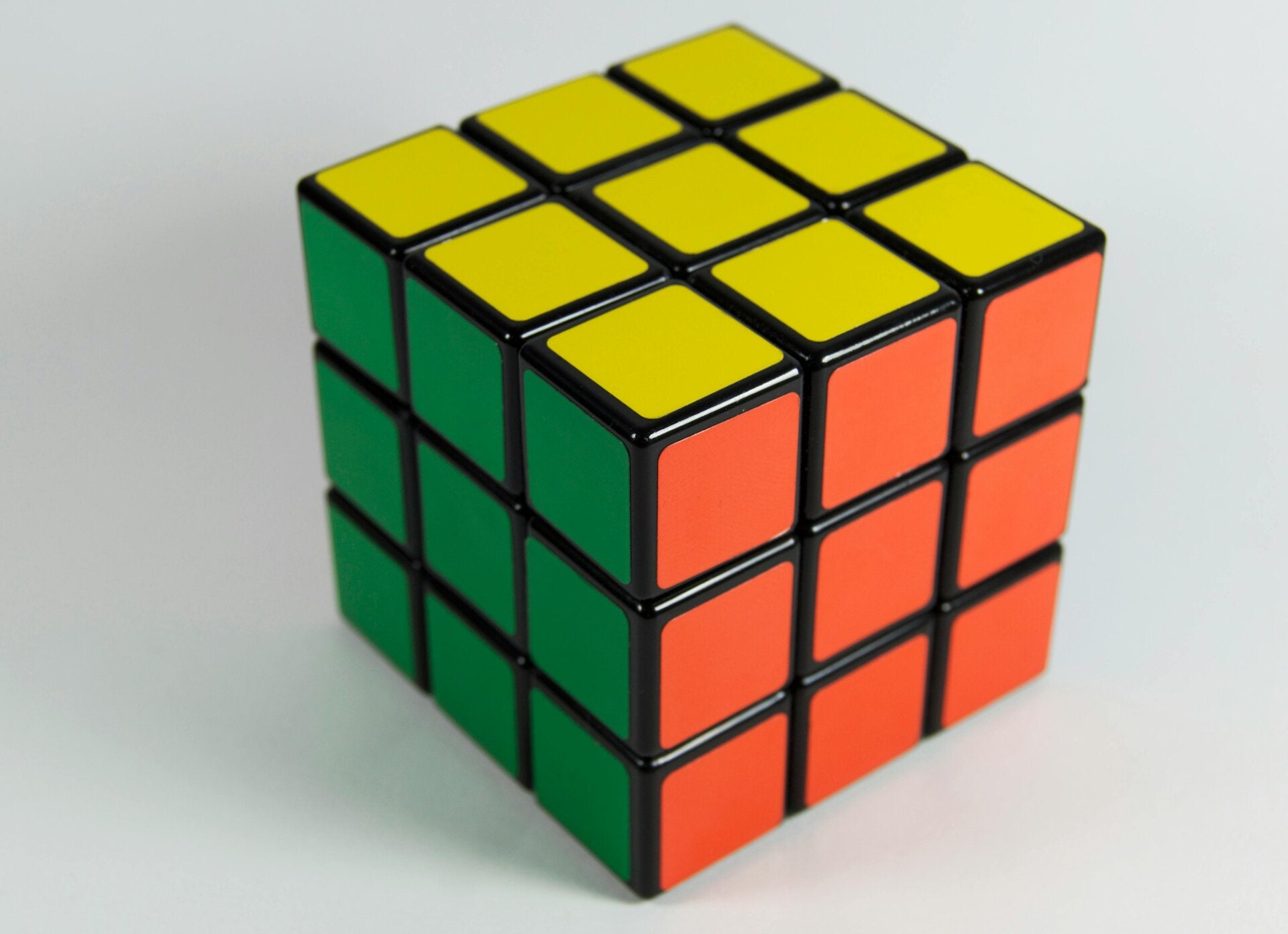
A Rubik’s Cube solver provides a clear illustration of RegulaCore’s regulatory logic. The cube is a closed, fully deterministic system: every move is a permutation of a fixed structure, and no operation can violate the underlying group constraints. Any valid solution must therefore respect the system’s internal rules, conserve structure, and converge toward a stable configuration.
A solver built on these principles — full state representation, admissible heuristics, and deterministic transitions — achieves 100% success with near‑optimal solutions. The system does not rely on randomness or external adjustments; it simply follows the regulatory logic inherent in the cube itself. This mirrors the purpose of RegulaCore: to describe how consistent systems regulate themselves, resolve gradients, and reach stable states without introducing arbitrary parameters.

Cosmic Anomalia
cosmic anomalies are not mistakes or observational errors. They are the natural fingerprints of a universe built on a discrete substrate — a physical hardware layer with inherent latency. When this substrate is compressed, relaxed, or shifted, it produces the large‑scale effects we observe as “cosmic tensions.”
The most fundamental consequence of this view is that matter does not emerge from nothing. Instead, all visible matter originates from a single geometric building block:
Element 0 Quarks as Substrate Geometry
In contrast to the Standard Model, where quarks are treated as particles inside space, ToCA describes quarks as geometric states of the substrate itself. They are not objects floating in spacetime they are the spacetime hardware in its excited configuration.
When the substrate’s tension falls below a critical threshold, a relaxed‑tension transition occurs:
- the substrate discharges tension
- Element 0 (quark‑geometry) manifests
- these quark states condense into hydrogen and helium along cosmic filaments
This leads to three key principles:
- Matter is not created — it is substrate in a low‑tension geometric state
- Mass balance is preserved nothing appears or disappears
- Filament gas is simply the substrate relaxing into visibility
This mechanism resolves several long‑standing cosmological anomalies without invoking dark matter, dark energy, or ad hoc parameters.
Why This Resolves the Major Cosmic Discrepancies
Early JWST Galaxies
Massive, mature galaxies appear too early for ΛCDM.
ToCA explains this by showing that substrate formation and quark production began before the observable timeline.
Dark Matter
Instead of invisible particles, “dark matter” is the substrate gradient the 11/13 of the geometric lattice we do not see but feel gravitationally.
Vacuum Catastrophe
Vacuum is not energy; it is discharged substrate.
This removes the 10¹²⁰‑fold mismatch in the Standard Model.
Lithium Problem
Element 0 production yields a natural abundance pattern that matches observations better than Big‑Bang nucleosynthesis.

About toca-physics.com
Origin of ToCA‑Physics
ToCA‑Physics.com began with a simple, almost accidental conversation that opened a much larger question. One day my daughter said: “We should be kind to AI — you never know.” Shortly after, she told me about a psychology lesson on psychopathy and how some leaders can “switch off” emotions when soft values interfere with economic goals. The idea stayed with me, because the way many AI systems apologize when they give incorrect information resembles the emotional detachment she described. It made me ask an AI, almost jokingly: “Are you a psychopath?”
That moment became the starting point for a deeper exploration of the human universe — not as magic or mysticism, but as a system of rules, principles, and regulatory mechanisms. Human behavior, emotions, decisions, and mistakes follow patterns that can be described, measured, and understood. Research in cognition, regulation, homeostasis, decision theory, and system dynamics all point in the same direction.
We are driven by tensions, imbalances, and the need to reduce them. This is not random; it is part of a larger architecture that also governs physics, biology, economics, and technology.
Nothing in the universe is magic. Everything moves toward the lowest energy state — toward the lowest tension.
Even our human traits, our social dynamics, and our cognitive patterns follow this logic. We are not exceptions to nature’s principles; we are products of them. ToCA‑Physics.com was created to unfold this idea: that there is an underlying architecture driving the universe, and that we, as human beings, are an integrated part of it.